Working Hands
A Story On Osteoarthritis

It was quiet in our house. It was, usually. The faint mumble of a TV. A running faucet from somewhere in the kitchen. I’m sitting at my desk when the ground beneath me begins to gently rumble. I hear the mechanical grinding of gears. The garage. Dad’s home.
I rush downstairs and push past my frenzied dogs to open the door.
Thanks for reading! Subscribe for free to receive new posts and support my work.
“Hi Apa.”
He smiles faintly. In his hands are several bags, his water bottle, and other miscellaneous things. He walked over to my Mom to relieve some of the stuff off his arms.
“어떻게? 오늘은 너무 더웠는데. 얼른 내려와, 저녁 식사 거의 다 됐어.”
“Oh no how did you work? It was so hot today. Come on down—dinner is almost ready.”
“Yeah.”
He turns around, walks to the stairs nursing his right hand, and climbs up in the last fight of the day.
One single word. Today must have been hard.
I sat down. The amount of words in a welcome were always a judge on how hard the work was that day. I watched this scene every day of my life up until I went to college. On some days there were more words. On others, the welcomes were silent.
My dad is a general contractor and does custom remodels. He started around 2007, when I was born. He had just left his sales job when the housing crisis was starting to take its toll. We had to move to my grandma’s house so we could rent out our town home to make some money, but we needed a stable income. So my Dad, a UCLA graduate in the arts, did what he could.
“I started remodeling houses,” he said, “I was a fine arts major so designing and artistic sense was something I already had.”
It was sophomore year of high school when my family realized my dad had osteoarthritis. I had always known construction was a hard job but it was around this time when it continued to get worse. It was more than just fatigue. It was a nauseating, rubbery grinding sound when he bent his knee. It was a pain in his bones that he couldn’t quite shake and a personal reminder of the work he’s done and the work he still has to do.
According to Mayo Clinic, arthritis is the degradation of the cushion between bones and the bones themselves that causes pain and the limitation of movement. It comes in (more or less) three types. The first type is osteoarthritis and according to a study published in the National Institute of Arthritis and Musculoskeletal and Skin Disease, this type is a result of many years of hard or high impact usage of the joints and bones over time. Scientists at a University in Henan, China have researched the development of arthritis treatments that can alleviate pain and slow the disease’s progression which includes anything from pain killers and reduced workloads, but there is still no cure.
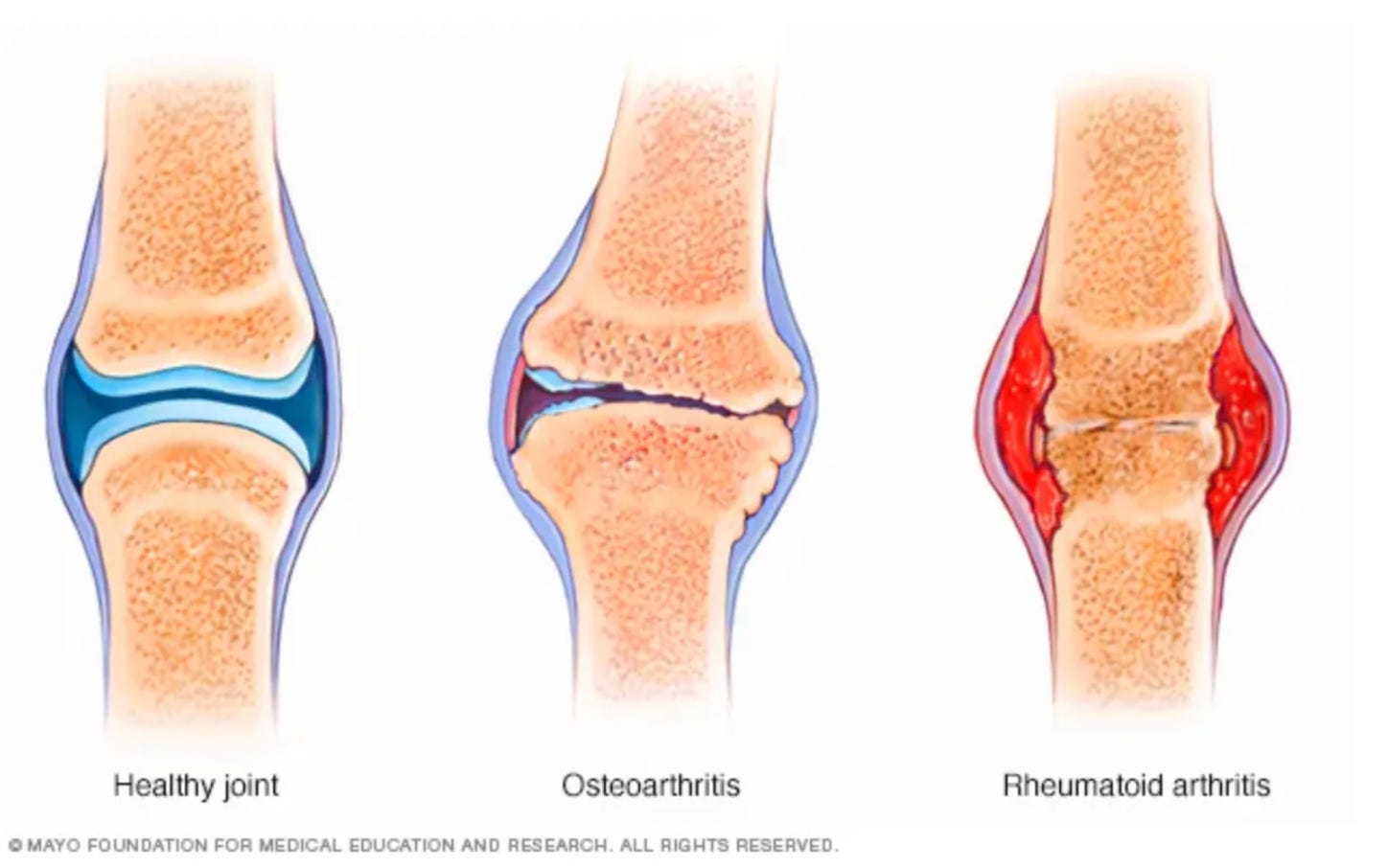
On most days it’s hard for my dad to carry out work on the job site. “Some days, it’s not as bad. It depends on what I did on the job site. Some days I can’t get out of bed. Every day it’s different but every day there’s something,”he added.
I realize now that what I saw and what my dad experienced is not what many believe arthritis to be. As it is depicted in media, (when, if at all, depicted in media), it is often not portrayed accurately. I scoured the internet and a multitude of streaming channels, but could not find a single depiction of osteoarthritis. Besides the few public service announcements from PBS, the closest I was able to find was a portrayal of rheumatoid arthritis in “The Good Doctor“.
The show, made in 2017 by David Shore, follows a series of residents and their struggles around the emergency room. Dr. Reznick, one of the residents, gets diagnosed with rheumatoid arthritis. Knowing that this could very well be the end of her career as a surgeon, she confides in Dr. Glassman, their supervisor, in the hopes of advice and support. In a heartfelt and determined speech, she asks Dr. Glassman to give her a cortisone shot, which are injections of anti-inflammatory medication, arguing that at this point because the issue was simply pain and not mobility she would still be able to perform the surgery safely if she could receive the shot. In sympathy, he agrees to hide her condition.
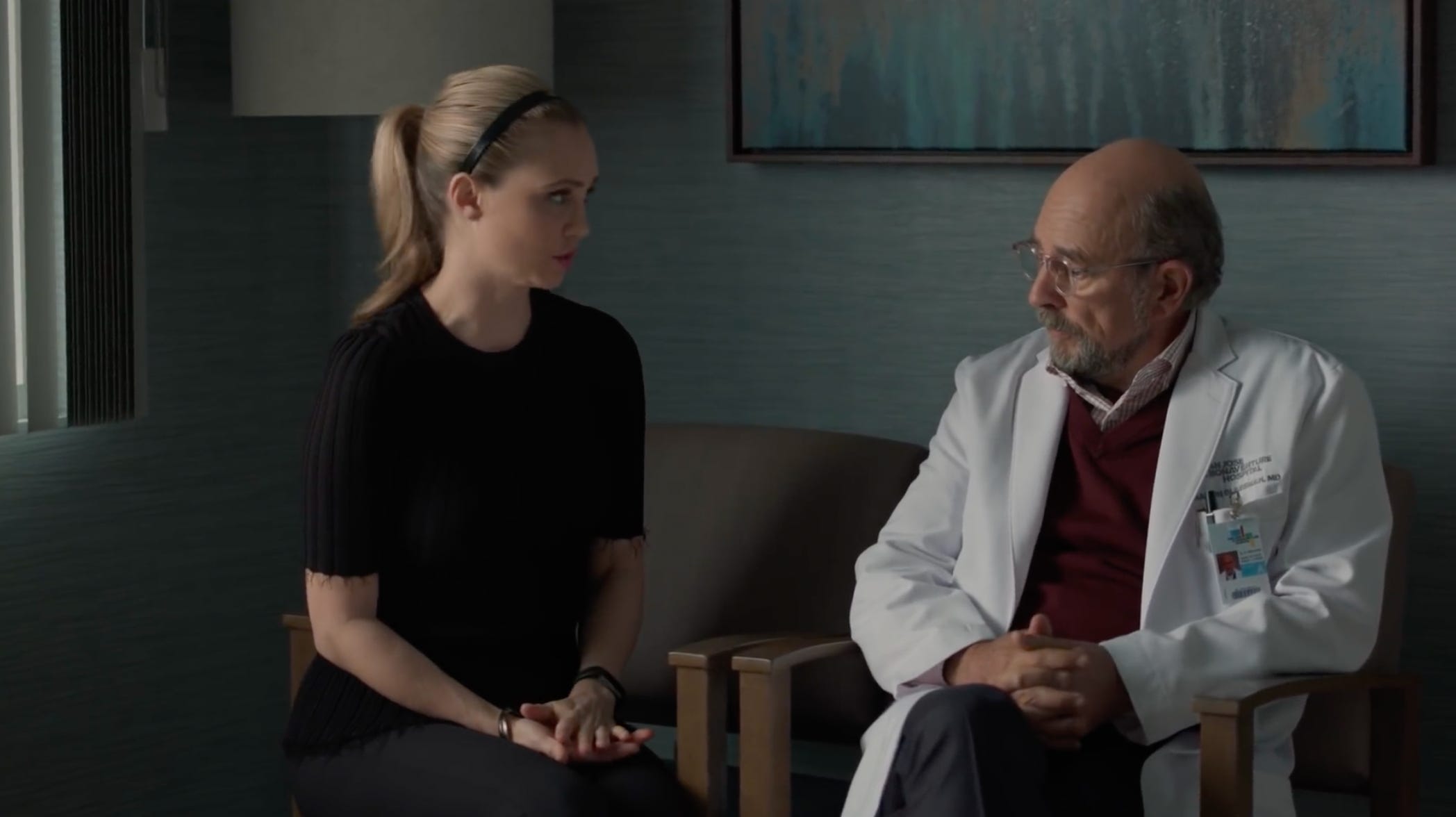
Dr. Rensik talking to Dr. Glassman about her condition. Source image from ABC
Though this is a high stakes and tension filled moment for Reznik, this issue rarely appears on screen in the duration of the rest of the season. Rheumatoid arthritis is a chronic illness and causes frequent pain. Though cortisone shots do help, according to Princeton Sports and Family Medicine they have to be taken repetitively and can stop working over time and in fact, according to the Cleveland Clinic, cortisol also has various side effects like high blood pressure or even further cartilage harm. These are the symptoms that Resnick would have to deal with everyday and as a surgeon this would arguably be the most life changing moment in her career. Yet it never receives the attention that would be expected from an event that could end her entire livelihood. Here arthritis is added, not for an accurate depiction of the condition, but rather used more like a plot device to add a point of conflict in Reznick’s story.
For my Dad, arthritis wasn’t just a one-day thing. It didn’t just pop up on some days and disappear the next. It lingered and impacted everyday life. If anything, the only thing that they were right about was the need for rest and reduced activity in order to recover.
I asked my dad if this would be possible for him.
“I could only recover if I stopped working,” he said.
“Nothing else?” I asked.
“Unfortunately I think the state of the matter here is that it’s either work or recovery. You can’t really do both,” he said.
Though it is obvious that medical dramas aren’t always accurate, “The Good Doctor“ doesn’t give the condition the coverage it needs in order to accurately depict what life is like with arthritis. It passes off arthritis as something minor or rather something relatively treatable with cortisone shots, the only remedy provided in the show besides rest. If anything, “The Good Doctor” shows how our society doesn’t truly care about chronic illness nor do we take many of them seriously.
Because of the years that my dad has worked we are able to live comfortably today. But every day it’s a struggle to pay the bills, taxes, and fees to keep that life. But without a remedy, it comes at the price of a loving, caring smile twinged with pain. Without a cure, he grits his teeth through the grinding of his joints. And yet he keeps going.
As much as I wish there was a resolution to this story, there isn’t. It’s still in the making, and hopefully as retirement comes my dad’s hands will recover. But with the strains in the economy, retirement gets pushed further and further away.
The room was silent. I looked down at my questions. It was a hard topic to swallow. Out of all the reasons why my Dad had to strain his joints everyday I knew my education was a major factor. I scanned my paper. One question left. “What motivates you?”I asked.
“You,” he said.
I looked at him.
“I do all of this for you guys,” he continued. “There have been so many times in my life where I could have died. But by G-D’s grace I’m alive. And I truly believe I was kept alive to raise you and to support you guys,” he said.
After watching and talking with my dad it has made me understand the struggle he faces every day, the fight that is “living”. Every day, long drives home drains us. Every day, it takes every ounce of strength we have left to stumble through the door, climb up the stairs, and hit the bed.
But every day it’s the family that we cherish that keeps us going. Every day it’s the past and the future we see in their eyes, in our own eyes, that give us excitement for what is to come. It’s in the small moments when you see a smile rushing towards to hug you as the gears of a garage wind to a close that remind us who we’re fighting for. Every day is a fight, yes, but we fight for the ones we love.
My Dad has done so much to help me reach my dreams and I will be forever grateful for that.
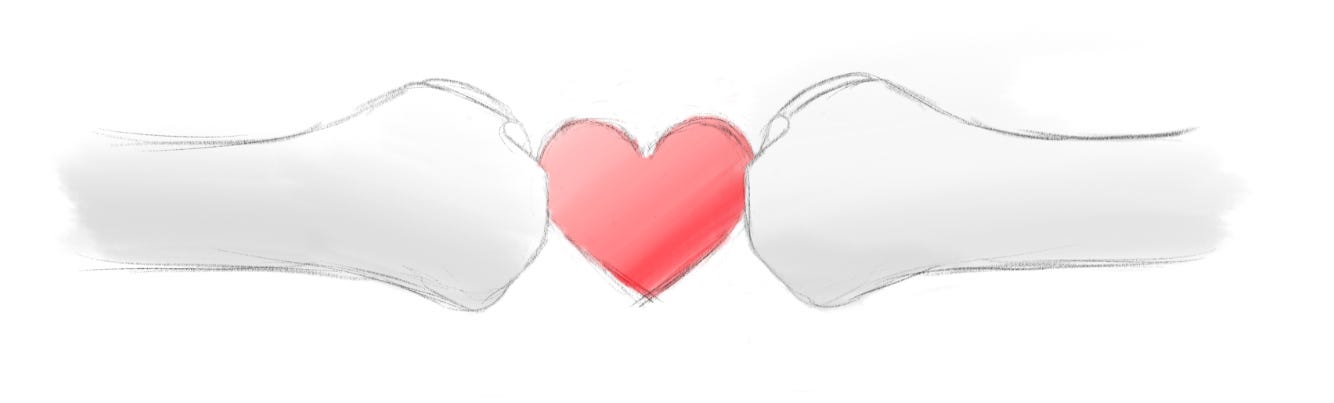
Original art by Ariel Choe
Bibliography
Clinic, Mayo. “Arthritis.” Mayo Clinic, March 3, 2026. https://www.mayoclinic.org/diseases-conditions/arthritis/symptoms-causes/syc-20350772.
National Institute of Arthritis and Musculoskeletal and Skin Diseases. “Niams Health Information on Osteoarthritis.” National Institute of Arthritis and Musculoskeletal and Skin Diseases, June 5, 2025. https://www.niams.nih.gov/health-topics/osteoarthritis.
Lou, Zhengchi, and Fan Bu. “Recent Advances in Osteoarthritis Research: A Review of Treatment Strategies, Mechanistic Insights, and Acupuncture.” Medicine 104, no. 4 (January 24, 2025). https://doi.org/10.1097/md.0000000000041335..
Shore, David. “Dr. Reznick Wants Dr. Glassman to Keep Her Condition a Secret - the Good Doctor.”, November 18, 2019, ABC, YouTube video, 2:15,
.
Wegner, Peter. “Why Do Corticosteroid Injections Wear off? Understanding Their Role in Pain Management.” Why Do Corticosteroid Injections Wear Off? Understanding Their Role in Pain Management: Princeton Sports and Family Medicine, P.C.: Sports Medicine. Accessed June 9, 2026. https://www.princetonmedicine.com/blog/why-do-corticosteroid-injections-wear-off-understanding-their-role-in-pain-management.
Professional, Cleveland Clinic medical. “Cortisone Shots: How They Work and Side Effects.” Cleveland Clinic, October 24, 2025. https://my.clevelandclinic.org/health/treatments/cortisone-shots-steroid-injections.